Sharing AI-Assisted Product Mockups With Clients: A Privacy-First Workflow (and Where SynthID Remove Fits)
I make product mockups for small brands: packaging renders, a bottle on a marble counter, a hoodie on a model who doesn't exist. A lot of that work now starts with an AI image generator and ends in Photoshop. The part nobody warned me about was what those files carry with them when they land in a client's inbox.
This is the workflow I settled on. It's about privacy and professionalism, not about hiding anything. If a client or platform needs to know an image is AI-assisted, they should know.
What actually leaks in a mockup file
Open a typical export in a metadata viewer and you may find:
- EXIF: camera or device info, sometimes GPS on photos used as backgrounds, plus the software name and version.
- XMP: edit history, document IDs, and occasionally the original file path, like
/Users/sofia/Clients/OtherBrand/rejected-v3.psd. That one is embarrassing. - IPTC: creator, copyright and caption fields you may have filled in for a different job.
- C2PA / Content Credentials: a signed record of how the image was made, including AI generation steps.
- PNG text chunks: some generators write the full prompt, seed and model settings in here.
The prompt and file paths are the real privacy problem. They can reveal other clients, internal project names, or the exact recipe you'd rather keep as your own craft.
Step 1: Strip working metadata with the free tool
Before anything goes out, I run exports through SynthClear's free Remove AI Label tool. It creates a fresh copy without the EXIF, XMP, IPTC, C2PA and PNG text data, and it processes files in your browser, so the mockups aren't uploaded to a server. Batches work (JPG, PNG, WebP), which matters when a round of revisions is twenty files.
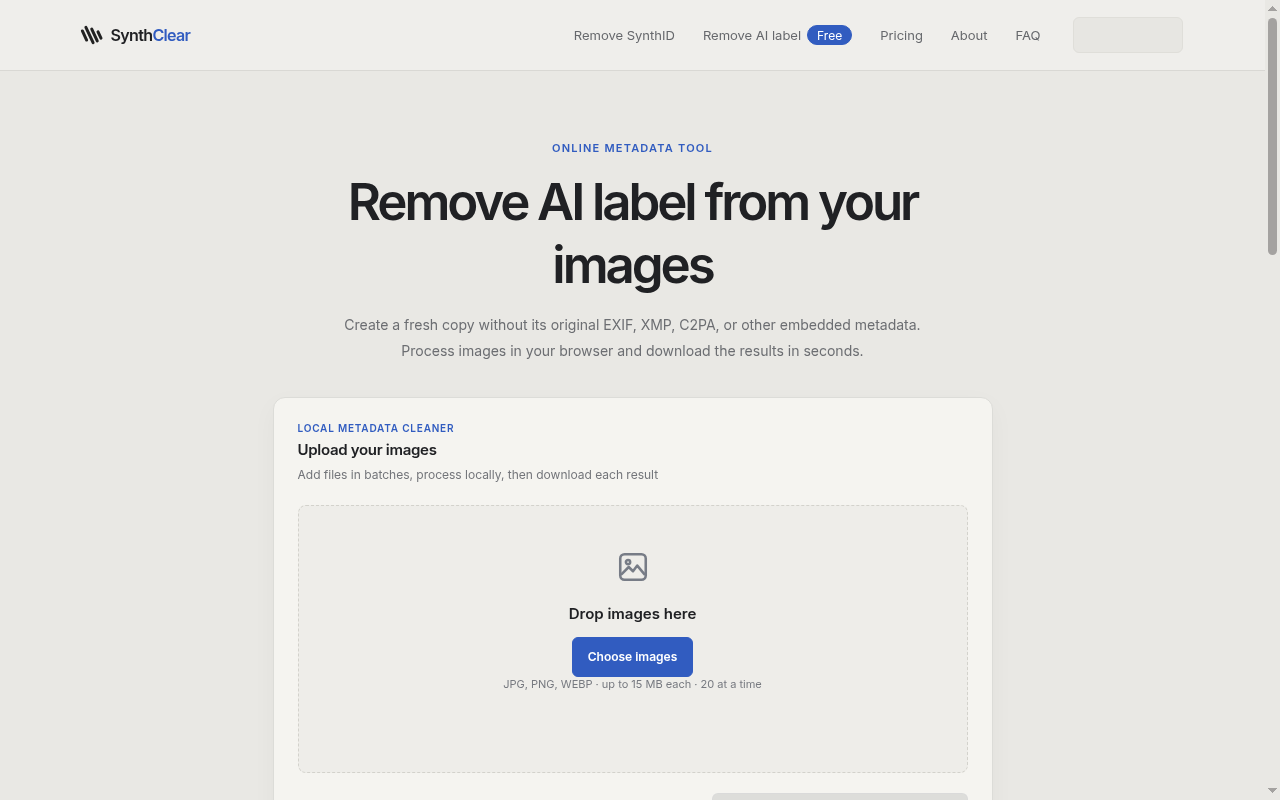
For most client work, this is the only step I need. A clean file with no prompts, no paths and no leftover credits from another job.
Step 2: Decide what disclosure the job needs
Stripping metadata removes machine-readable labels. It doesn't change your obligations, so I decide disclosure explicitly instead of letting file metadata decide for me:
- Internal concept rounds: a line in the email ("these are AI-assisted concepts, final shoot TBD") is enough.
- Anything going public (ads, marketplace listings, social posts): follow the platform's AI-content rules and the client's policy. If a platform asks for an "AI-generated" toggle, use it. If the client wants Content Credentials kept, skip Step 1 for those deliverables.
- Contracts that require provenance: keep the original, unstripped master in your archive alongside the cleaned copy.
My rule of thumb: clean the working data, keep the honest label wherever someone downstream relies on it.
Where SynthID remove fits (and where it doesn't)
Some generators embed an invisible SynthID watermark in the pixels themselves. Metadata cleaning doesn't touch it. SynthClear's homepage offers a paid SynthID remove tool for images you own or are authorized to edit, at $1 per image or $9/month for 100 credits. The site itself says results vary by image and aren't guaranteed.
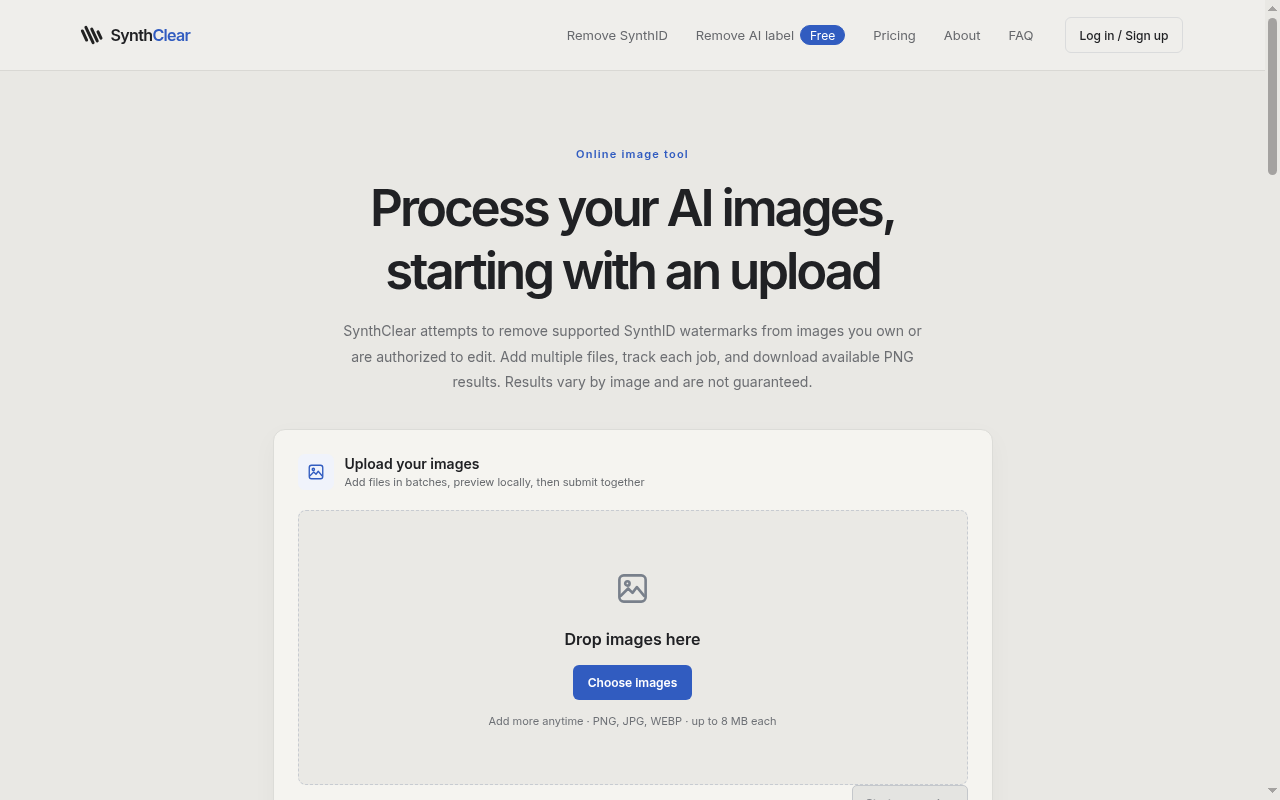
I reach for it rarely: for example, when an AI-generated background is only a small part of a heavily retouched composite I'm licensing to a client who has already been told how it was made, and the watermark interferes with their downstream tooling. I don't use it to pass AI work off as photography, to get around platform disclosure rules, or to slip past AI detection. That would be dishonest, and in many places it breaks terms of service or advertising rules. If you're unsure, keep the watermark and disclose.
My send-to-client checklist
- Export the final from the editor.
- Run the export through the free metadata cleaner.
- Spot-check one file in a metadata viewer.
- Write the disclosure line in the delivery email.
- Archive the unstripped master with the project.
- Only if the job truly needs it, and you own the image, consider SynthID remove.
Further reading
I've written about this before from other angles: a pre-publish checklist for cleaning metadata with Remove AI Label before you reach for SynthID remove, and a short note on starting with the free Remove AI Label tool to clean badges.
Clients mostly care that the mockup looks right and that you've been straight with them. A two-minute metadata pass protects your other clients and your process, and an explicit disclosure line protects the relationship.